
Introduction to AI in Digital Marketing
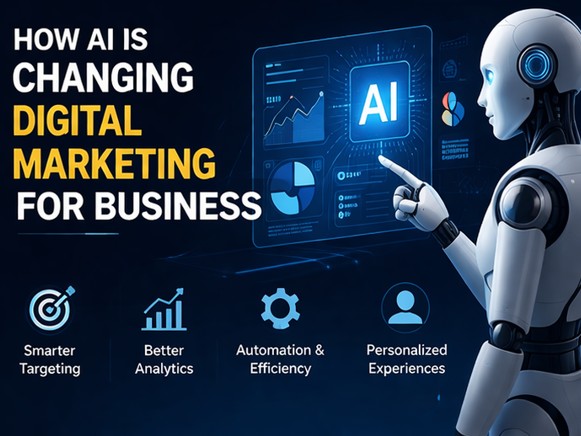
Artificial Intelligence (AI) is no longer just a buzzword—it has become the backbone of modern digital marketing. Businesses today are dealing with massive amounts of customer data, multiple marketing channels, and increasing competition. Managing all of this manually is almost impossible. This is where AI comes in.
AI allows machines to analyze data, learn from patterns, and make intelligent decisions without constant human input. In digital marketing, this means smarter campaigns, better customer understanding, and improved performance.
Earlier, marketers relied on basic tools and guesswork. Today, AI can predict customer behavior, automate repetitive tasks, and personalize user experiences at scale. Whether it’s recommending products, optimizing ads, or writing content, AI is changing how businesses connect with their audience.
For businesses in 2026, adopting AI is not optional—it is necessary to stay competitive and relevant in the market.
How AI is Used in Digital Marketing for Businesses
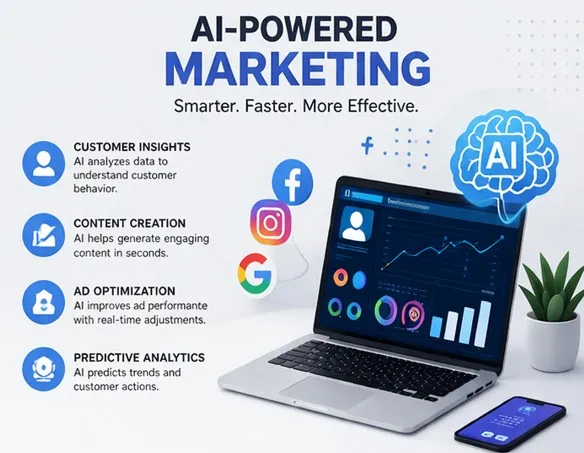
AI is being used across different areas of digital marketing to improve efficiency, accuracy, and results. Let’s explore each use case in detail.
AI in Content Creation and Copywriting
Content is the foundation of digital marketing, and AI is transforming how content is created. AI tools can generate blog posts, social media captions, product descriptions, email content, and even video scripts.
Instead of starting from scratch, marketers can use AI to:
- Generate content ideas based on trending topics
- Create SEO-friendly outlines
- Write drafts quickly
- Improve grammar and readability
For example, if a business wants to write a blog on “AI in marketing,” AI tools can suggest headings, keywords, and even full paragraphs.
However, human input is still important. AI helps in speed and efficiency, but creativity, storytelling, and brand voice should be refined by humans.
AI for Email Marketing Automation
Email marketing becomes much more powerful with AI. Instead of sending the same email to everyone, AI allows businesses to send personalized emails based on user behavior.
AI can:
- Analyze when users open emails
- Identify which content they click
- Segment users based on interests
For example, if a customer browses a product but doesn’t purchase it, AI can automatically send a reminder email with a discount offer.
This improves:
- Open rates
- Click-through rates
- Conversion rates
AI also helps in A/B testing by automatically selecting the best-performing subject lines and email formats.
AI in Social Media Management and Scheduling
Social media marketing requires consistent posting and engagement. AI tools make this easier by automating many tasks.
AI can:
- Suggest trending topics and hashtags
- Recommend the best time to post
- Schedule posts automatically
- Analyze engagement data
For example, AI tools can identify when your audience is most active and schedule posts accordingly to maximize reach.
AI also helps businesses understand what type of content performs best—videos, images, or text—and adjust strategies accordingly.
AI in Search Engine Optimization (SEO)
SEO is one of the most important areas where AI is making a big impact. Search engines like Google also use AI to rank content, so marketers must adapt accordingly.
AI helps in:
- Finding high-ranking keywords
- Understanding search intent
- Optimizing content structure
- Analyzing competitors
For example, AI tools can suggest:
- Which keywords to use
- How long your content should be
- What headings to include
This helps businesses create content that is more likely to rank on search engines.
Impact of Artificial Intelligence on Digital Marketing Strategies
The impact of artificial intelligence on digital marketing strategies is huge. It has completely changed how businesses plan, execute, and optimize their marketing efforts.
Data-Driven Decision Making
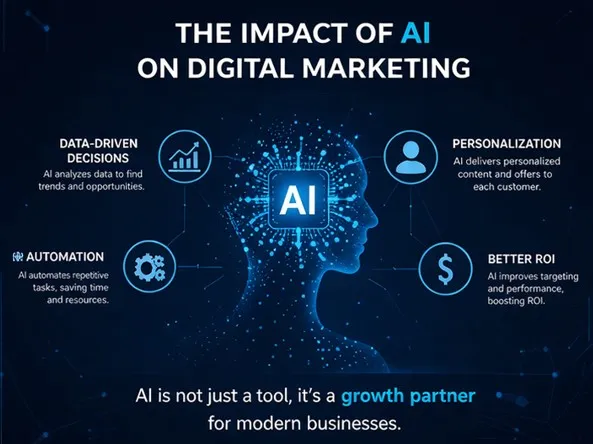
One of the biggest advantages of AI is its ability to process large amounts of data quickly. Businesses can now make decisions based on real insights instead of assumptions.
AI analyzes:
- Customer behavior
- Website interactions
- Campaign performance
For example, AI can tell which ad is generating the most leads or which landing page is converting better.
This helps marketers focus on what works and avoid wasting time and money on ineffective strategies.
Real-Time Marketing Optimization Using AI
AI allows businesses to optimize campaigns in real time. This means changes can be made instantly based on performance.
For example:
- Adjusting ad budgets automatically
- Changing targeting settings
- Pausing low-performing campaigns
This ensures that marketing efforts are always optimized for the best results.
Predictive Analytics and Customer Insights
Predictive analytics is one of the most powerful features of AI. It helps businesses predict future customer behavior based on past data.
AI can predict:
- Which customers are likely to buy
- Which users may stop engaging
- What products will be in demand
This helps businesses plan better campaigns and improve customer retention.
AI vs Traditional Marketing Strategy: Key Differences
Traditional marketing is based on manual work and limited data. AI-based marketing is:
- Faster and automated
- Highly accurate
- Personalized for each user
AI eliminates guesswork and provides clear insights, making marketing more effective.
AI Tools for Digital Marketing Automation in 2026
AI tools are becoming essential for businesses to stay competitive.
Best AI Tools for Social Media Marketing and SEO
Popular tools include:
- ChatGPT for content writing
- SEMrush for SEO analysis
- Surfer SEO for content optimization
- Canva AI for design
These tools help businesses save time and improve efficiency.
AI Tools for Content Generation and Blogging
AI tools can:
- Generate blog topics
- Create outlines
- Write complete articles
They also help maintain consistency and improve content quality.
AI-Based Marketing Automation Platforms
Platforms like HubSpot and Mailchimp use AI to automate:
- Email campaigns
- Lead tracking
- Customer segmentation
This allows businesses to focus more on strategy rather than manual work.
How to Choose the Right AI Tool for Your Business
When selecting AI tools, consider:
- Your business goals
- Budget
- Ease of use
- Features required
Choosing the right tools ensures better results and higher ROI.
Benefits of AI in Digital Marketing for Small Businesses
Artificial Intelligence is becoming a game-changer for small businesses. Earlier, only large companies could afford advanced marketing tools, but now AI has made it possible for small businesses to compete on the same level. By using AI, small businesses can automate tasks, improve decision-making, and reach the right audience more effectively without needing a big team or budget.
If you want to understand how AI tools, automation, and real-world digital marketing strategies work in practice, learning from experts can make a big difference. Many business owners and students are now choosing professional training programs like ASDM – Digital Marketing Course in Ahmedabad to gain hands-on experience with AI-based marketing, SEO, and paid advertising. Such courses not only help you understand the theory but also teach you how to apply AI in real business scenarios to grow faster and stay ahead of competitors.
Cost Reduction and Improved Efficiency
One of the biggest advantages of AI is that it helps reduce operational costs while improving overall efficiency. In traditional marketing, businesses often need multiple employees to handle tasks like content creation, data analysis, customer support, and campaign management. This increases salary expenses and time consumption.
With AI tools, many of these tasks can be automated. For example, AI can generate content, schedule social media posts, respond to customer queries through chatbots, and analyze campaign performance in real time. This reduces the need for manual work and allows businesses to operate with a smaller team.
Additionally, AI reduces human errors and increases accuracy. Tasks that previously took hours can now be completed in minutes. This means businesses can focus more on strategy and growth instead of repetitive work. Overall, AI not only saves money but also improves productivity and business performance.
Better ROI with AI-Based Campaigns
Return on Investment (ROI) is one of the most important factors in digital marketing, and AI helps improve it significantly. Traditional marketing often involves guesswork, where businesses are not sure which strategy will work best. This can lead to wasted budget and poor results.
AI changes this by using data-driven insights. It analyzes customer behavior, preferences, and past interactions to create highly targeted campaigns. This means businesses can show the right message to the right audience at the right time.
For example, AI can identify which ads are performing well and automatically allocate more budget to those campaigns. It can also pause underperforming ads to avoid unnecessary spending. This level of optimization ensures that every rupee spent on marketing delivers better results.
As a result, businesses experience higher conversion rates, improved customer engagement, and better overall ROI.
AI for Lead Generation and Conversion Optimization
Generating quality leads and converting them into customers is a major challenge for businesses. AI makes this process much more efficient and effective.
AI tools can analyze user data to identify potential customers who are most likely to be interested in your product or service. This is known as smart lead generation. Instead of targeting a broad audience, AI focuses on high-quality leads, which increases the chances of conversion.
Once leads are generated, AI also helps in conversion optimization. For example:
- AI can personalize landing pages based on user behavior
- It can recommend products based on browsing history
- It can send automated follow-up emails to nurture leads
AI chatbots also play an important role here. They engage with visitors instantly, answer their questions, and guide them through the buying process. This improves user experience and increases the chances of converting visitors into customers.
Overall, AI not only brings more leads but also ensures that those leads are converted effectively.
Scaling Marketing Efforts with Limited Resources
Scaling a business usually requires more resources, including time, money, and manpower. However, AI allows small businesses to scale their marketing efforts without significantly increasing these resources.
With AI, businesses can manage multiple campaigns across different platforms simultaneously. For example, a small business can run email campaigns, social media ads, and SEO strategies all at once using AI-powered tools.
AI also helps maintain consistency. It ensures that marketing messages remain uniform across all channels, which is important for brand building.
Another important benefit is automation. Tasks like posting content, analyzing performance, and responding to customers can run automatically in the background. This allows business owners to focus on strategic decisions rather than daily operations.
In simple terms, AI acts like a powerful assistant that helps businesses grow faster without increasing workload or costs.
How AI Improves Customer Targeting in Digital Marketing
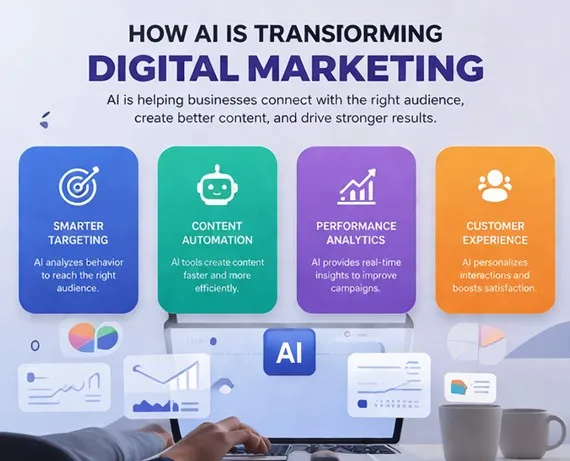
Customer targeting is one of the most important aspects of digital marketing, and AI has completely transformed how it works. Instead of targeting a general audience, businesses can now focus on specific groups of people who are more likely to convert.
AI uses data, machine learning, and behavioral analysis to understand customers better and deliver highly relevant marketing messages.
Audience Segmentation Using AI Algorithms
Audience segmentation means dividing customers into different groups based on their characteristics. AI makes this process more advanced and accurate.
Instead of basic segmentation like age or location, AI analyzes deeper factors such as:
- Online behavior
- Purchase history
- Interests and preferences
- Interaction with previous campaigns
For example, an e-commerce business can create segments like:
- Frequent buyers
- First-time visitors
- Cart abandoners
This allows businesses to create customized marketing strategies for each group, increasing engagement and conversions.
Behavioral Targeting and Predictive Analysis
AI tracks how users interact with websites, apps, and ads. It collects data like:
- Pages visited
- Time spent on site
- Products viewed
- Click patterns
Using this data, AI can predict what users are likely to do next. This is called predictive analysis.
For example, if a user frequently searches for digital marketing courses, AI can show them relevant ads or content related to that topic. This makes marketing more relevant and increases the chances of conversion.
AI for Retargeting and Personalized Ads
Retargeting is a powerful strategy where businesses show ads to users who have already interacted with their brand. AI makes retargeting smarter and more effective.
For example:
- If a user visits a product page but doesn’t buy, AI can show them ads for that product later
- If a user adds items to the cart but leaves, AI can remind them with a discount offer
AI ensures that these ads are personalized and shown at the right time, increasing the chances of conversion.
Improving Customer Journey with AI Insights
The customer journey includes all the steps a user takes before making a purchase. AI helps businesses understand and optimize this journey.
AI can identify:
- Where users drop off
- What content they engage with
- What influences their decisions
Based on these insights, businesses can improve each stage of the journey, from awareness to conversion.
For example, if users leave a website at the checkout stage, AI can suggest improvements like simplifying the process or offering discounts.
This leads to a smoother customer experience and higher conversion rates.
Conclusion: Why Businesses Must Adopt AI in Digital Marketing
AI is transforming digital marketing in every possible way. It helps businesses improve efficiency, reduce costs, and achieve better results.
Companies that adopt AI early will have a strong competitive advantage. From content creation to advertising, AI makes marketing smarter and more effective.
If you want to master AI tools, SEO, and advanced strategies, learning from a professional institute like ASDM – Digital Marketing Course in Surat can help you gain real-world skills and practical experience.