
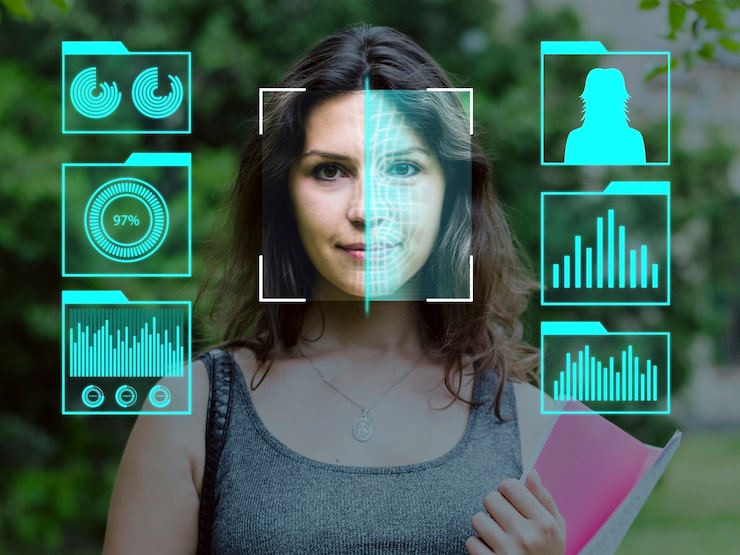
Deepfakes have moved from novelty to a real operational risk for businesses, governments, and everyday users. AI-generated faces, voices, and videos can be used to spread misinformation, commit fraud, or damage reputations. Traditional detection approaches often rely on spotting artefacts in the media, but these signals keep changing as models improve. A more durable approach is to focus on provenance: proving where content came from and whether it was generated or modified. That is where digital watermarking comes in—embedding an undetectable pattern into generated content so it can be identified later. If you are learning about content authenticity and media forensics through a generative AI course in Pune, watermarking is one of the most practical techniques to understand because it supports both detection and accountability.
Why Provenance Matters More Than “Perfect Detection”
Many deepfake detection systems work like a classifier: they look at an image or video and output “real” or “fake.” This sounds straightforward, but it can fail in two common situations. First, a high-quality deepfake might not show obvious visual artefacts. Second, content may be heavily compressed, resized, or re-shared, which changes the signals a detector depends on. Provenance-based methods take a different angle. Instead of trying to guess authenticity from pixels alone, they aim to confirm whether content matches a known origin.
Watermarking supports provenance by placing a hidden, machine-readable marker at creation time. Later, a verifier can extract or detect that marker to answer questions like:
- Was this generated by a particular model or platform?
- Was it altered after generation?
- Does it belong to a trusted workflow?
How Digital Watermarking Works in Generated Content
A digital watermark is an embedded pattern that is designed to be:
- Imperceptible to human viewers or listeners
- Detectable using a known algorithm or key
- Robust against common transformations like compression or cropping (for robust watermarking)
In simple terms, watermarking slightly modifies content in a controlled way. For images and video, the watermark might be embedded into frequency components rather than raw pixels, so normal viewing does not reveal it. For audio, it can be inserted into parts of the signal that are less noticeable to the human ear. For text, watermarking is usually statistical: it subtly biases word choices according to a secret rule so that the resulting text carries a detectable signature.
A key point is that watermarking is not the same as visible branding. It is not a logo in the corner. It is meant to be hidden, durable, and verifiable.
Common Watermarking Techniques Used Against Deepfakes
1) Frequency-Domain Watermarking (Images and Video)
Many robust methods embed watermarks in transforms such as DCT (Discrete Cosine Transform) or DWT (Discrete Wavelet Transform). These transforms represent content in a way that separates low-frequency structures from high-frequency details. By embedding the watermark in selected frequency bands, the watermark can survive JPEG compression, resizing, and moderate re-encoding.
2) Spread-Spectrum and Redundant Embedding
Spread-spectrum watermarking distributes the watermark signal across many parts of the content. This reduces the risk that a small crop or local edit will remove it. Redundant embedding repeats the watermark information so the detector can recover it even if some parts are damaged.
3) Neural Watermarking
With neural watermarking, the watermarking and extraction are learned using neural networks. The model can be trained to produce content that contains an embedded signature while still looking natural. These methods can be highly effective, but they must be tested carefully against removal attacks.
4) Text Watermarking for LLM Outputs
Text watermarking often works by partitioning vocabulary into “preferred” and “non-preferred” token sets using a secret key, then nudging generation to select tokens from the preferred set more often. Detection checks whether the pattern is statistically present. This is useful for provenance, but it can be weakened by paraphrasing, translation, or summarisation.
These technical ideas often appear in a generative AI course in Pune because they bridge AI generation, security thinking, and real-world governance.
Limitations and Attacks You Must Plan For
Watermarking is powerful, but it is not magic. A good implementation must assume adversaries will try to remove or mask the signal. Common challenges include:
- Heavy compression and re-encoding: Can distort or erase weak watermarks.
- Cropping, rotation, and scaling: Can break extraction unless the watermark is designed to be resilient.
- Adversarial removal: Attackers may apply filtering, noise, or learned removal models.
- Model-agnostic generation: If content is produced by open models or offline tools, it may carry no watermark at all.
Because of these risks, watermarking works best when combined with other controls such as cryptographic signatures, content credentials, secure logging, and policy enforcement.
Practical Implementation Guidance
If your goal is operational deepfake defence, treat watermarking as part of a broader pipeline:
- Embed at the source: Apply watermarking at generation time, not after distribution.
- Maintain keys and verification tools securely: Detection is only reliable if keys are protected.
- Test robustness: Evaluate against compression, resizing, cropping, and typical social-media transformations.
- Log provenance events: Store who generated content, when, and under what policy.
- Use layered verification: Pair watermark checks with metadata standards and behavioural signals.
Teams building these workflows often benefit from structured learning, and a generative AI course in Pune can help practitioners connect watermarking theory to deployment realities such as media pipelines, review processes, and compliance requirements.
Conclusion
Deepfake detection is becoming less about spotting imperfections and more about establishing trusted origin and traceability. Digital watermarking supports this shift by embedding hidden, verifiable patterns into generated content, enabling provenance tracking even as deepfakes become more realistic. While watermarking has limitations and can be attacked, it becomes highly effective when designed for robustness and used alongside other authenticity measures. For anyone working in AI media generation, security, or content governance, these watermarking techniques are foundational—and they deserve careful attention in any serious generative AI course in Pune.